
Dominica Citizenship by Investment: Why Lower Cost Does Not Mean Lower Planning Standards
- 12 May 2026
- Posted by: CoatesGlobal
- Category: Dominica
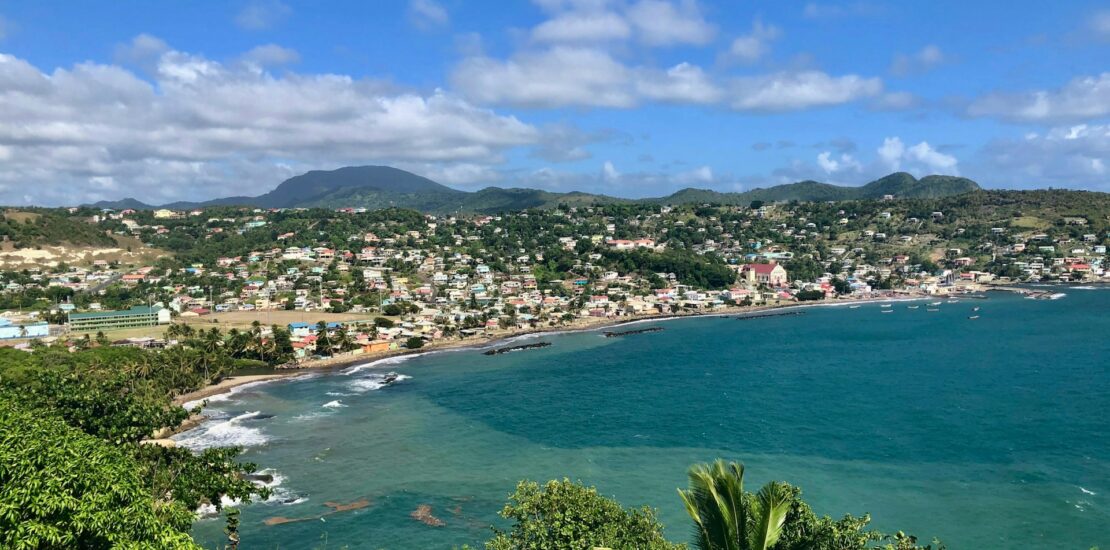
Dominica’s citizenship by investment programme has been running since 1993, making it one of the oldest and most continuously operated in the world. It is also, at a minimum contribution of USD $200,000 for a single applicant, the most affordable entry point to citizenship in the Caribbean. That combination — longevity, credibility, and accessibility — makes it an obvious candidate for UK families looking at second citizenship as part of a broader mobility or legacy planning strategy.
But the affordability framing can create a subtle misconception that gets applicants into trouble. Lower investment threshold does not mean lighter scrutiny. The Dominica Citizenship by Investment Unit (CBIU) operates a multi-tier due diligence process that is widely regarded as one of the most rigorous in the Caribbean, and the documentation and preparation standards it requires are every bit as demanding as you would find in higher-threshold programmes elsewhere.
This article is for anyone considering Dominica and wanting an honest picture of what the process actually involves — not just the headline cost, but the preparation that determines whether an application succeeds.
What the Programme Offers
The Dominica Citizenship by Investment Programme is one of the longest-running and most trusted CBI programmes. Applicants can choose between a contribution to the country’s Economic Diversification Fund (EDF) or an approved real estate investment. Successful applicants and their families gain citizenship and a Dominican passport, valid for 10 years and renewable thereafter, with visa-free or visa-on-arrival travel to over 145 countries.
The two investment routes are:
Economic Diversification Fund (EDF) — A non-refundable contribution to a government fund that finances national development projects including healthcare, education, renewable energy, and infrastructure. The minimum contribution is USD $200,000 for a single applicant, $250,000 for a couple, and $250,000 for a family of four. Additional dependants attract further contributions on top of these base figures.
Real estate investment — A qualifying real estate investment requires a minimum purchase of USD $200,000 in a government-approved project. These typically include luxury eco-resorts and hospitality developments. Real estate must be held for either three years from the date citizenship is granted, or five years if the future purchaser is also a citizenship by investment applicant. The real estate route carries additional government fees of USD $75,000 for a single applicant, making the total outlay higher than the donation route despite the same minimum investment figure.
Both investment pathways provide identical citizenship benefits and processing timelines for successful applicants. The donation route is chosen by most applicants for its simplicity and predictability of cost. The real estate route appeals to those who want an asset-based approach and the theoretical possibility of recovering capital after the holding period.
The Due Diligence Framework: Substantially More Rigorous Than It Was
This is where the “affordable means easy” assumption breaks down most directly.
The Dominica CBI programme operates under the Citizenship by Investment Act Cap. 1.2 and is administered exclusively by the CBIU under the Ministry of Finance. A mandatory four-tier due diligence process applies to all applicants and qualifying dependants above the age of 16, covering criminal history, source of funds and wealth, PEP status, and international watchlist screening.
That four-tier structure is not a procedural formality. It reflects the sustained pressure on Caribbean citizenship programmes from the EU, the US, and international bodies such as the Financial Action Task Force (FATF) to demonstrate that their due diligence standards genuinely filter out problematic applicants. Dominica’s programme has consistently ranked highly in independent CBI programme assessments, and it has maintained that standing precisely by taking the vetting process seriously.
In 2026, the CBIU has reinforced AML/CFT compliance requirements aligned with FATF standards, with particular emphasis on source-of-funds and source-of-wealth documentation. Dominica participates in the automatic exchange of financial account information as a CRS-compliant jurisdiction. Applicants who are tax residents in CRS-participating states should address the tax reporting implications of a second citizenship as part of their pre-application planning.
This last point is worth reading carefully. As a CRS-participating jurisdiction, Dominica is part of a global information-sharing framework. The assumption that a Caribbean citizenship application sits in a separate, invisible silo from your UK financial and tax affairs is no longer accurate. Preparation needs to account for that.
Source of Funds: What the CBIU Actually Examines
For the citizenship application to be approved, the CBIU checks the investor and their family members over the age of 16 for reliability. The programme’s legal department checks for criminal records or denials of citizenship and residence permits, followed by an inspection of income sources. The applicant must provide authentic documents and confirm that the investment was earned legally to pass the check successfully.
In practice, source of funds documentation for Dominica follows the same principles as any serious citizenship or residency programme:
Bank statements covering a minimum of 12 months across all personal accounts, demonstrating that the investment funds have a traceable, legitimate origin. Lump sums with no preceding documentation trail will attract questions.
Tax returns and income documentation showing that the wealth is consistent with your declared occupation and financial history. For UK applicants, this typically means HMRC documentation, P60 forms, audited company accounts, or certified accountant letters depending on the nature of your income.
Source of wealth narrative — a coherent written explanation of how your accumulated wealth was built, supported by corresponding documents. For business owners, this means company accounts and shareholder records. For property sellers, it means sale completion statements. For those receiving an inheritance or gift, it means probate or estate documents and clear transfer records.
Where the funds involve business income, complex corporate structures, or assets across multiple jurisdictions, the documentation burden increases proportionately. This is exactly the profile of many UK-based applicants — business owners with multiple accounts, property assets, and income from several sources — and it requires deliberate pre-application structuring rather than ad hoc assembly.
Our article on Caribbean nations strengthening due diligence explains how the regional standards have tightened across all Caribbean programmes, giving useful context on why this level of scrutiny is now standard across the board.
The Mandatory Interview: What It Involves and Who Must Attend
All applicants aged 16 and over must complete a virtual interview in English. This verifies the application details and assesses for any potential risks.
The interview is conducted on behalf of the CBIU and is a mandatory step — not something that can be waived or delegated. It is not an academic or language test. Its purpose is to verify the information provided in the application, confirm the identity of applicants, and identify any inconsistencies between what has been submitted and what the applicant actually says when questioned directly.
Due diligence fees are USD $7,500 for the main applicant and USD $4,000 for each dependant aged 16 or above. A mandatory interview fee of USD $1,000 per interview also applies.
For families with teenagers or young adults included as dependants, this means every relevant family member needs to be adequately prepared. The interview isn’t just a formality for adults — it extends to anyone 16 and over, which for some families includes a significant number of people.
Pre-screening — reviewing your application in detail before submission and identifying any areas of potential concern — is something a qualified immigration consultant should carry out as standard. Submitting a file that hasn’t been stress-tested is how applications stall mid-process.
Family Inclusion: Generous Rules, Specific Documentation
Dominica has one of the more generous family inclusion frameworks in the Caribbean, which is one of the reasons families with complex household structures are drawn to the programme.
Eligible dependants include a spouse, unmarried children under 31 who are fully dependent on the main applicant, parents and grandparents aged 65 and older, as well as the ability to add dependants after citizenship has been granted to the main applicant.
Additional dependant categories include children aged 18 to 30 who are financially dependent on the main applicant. Siblings of the main applicant or spouse can also be included under specific conditions.
The “add dependants after approval” provision is particularly useful for families that are still growing — a new child, a grandparent who becomes dependent later, or a sibling whose circumstances change. You don’t need to lock in your complete family structure at the point of application.
However, generous inclusion rules do not make documentation easy. Each dependant requires their own set of documents — passport, criminal record certificate (for those 16 and over), proof of the qualifying relationship to the main applicant, and evidence of dependency where applicable. Civil status documents — birth certificates, marriage certificates, adoption orders — must be properly authenticated and translated where they are not in English.
The dependency relationship between the main applicant and adult dependants needs to be substantiated, not simply stated. If you are including a 27-year-old child who is in full-time education, you need to evidence both the education status and the financial dependency. If you are including a parent aged 67 who is financially dependent on you, that dependency needs to be documented through financial records, not just asserted in an application form.
For families who have explored how dependency documentation works in other programmes, our article on second citizenship for children explores how families approach this across different investment migration routes and why getting the structuring right early matters.
Restricted Nationalities and the Enhanced Due Diligence Tier
Citizens from Belarus, Russia, Northern Iraq, and Yemen are restricted from applying. Citizens from North Korea and Sudan can apply only if the applicant has not lived in their home country for 10 or more years, has no substantial assets there, and no business ties there. Iranian applicants are permitted but are subject to enhanced due diligence and higher due diligence fees.
For UK-based applicants, this is most relevant where a family includes dual nationals, where a spouse holds a restricted nationality, or where a family member was born in a restricted jurisdiction even if they have subsequently acquired another citizenship. These situations don’t necessarily prevent an application, but they need to be flagged and planned around in advance rather than surfaced during processing.
Additionally, any applicant who has been denied a visa to a country with which Dominica has a visa-free travel agreement must subsequently successfully obtain a visa from that country in order to be eligible to apply. Prior Schengen or UK visa refusals are therefore a factor that must be addressed — not ignored — before submission.
The OECS Harmonisation and What It Means for Applicants
In June 2024, the five main OECS Caribbean CBI nations — Dominica, Antigua & Barbuda, Grenada, St. Kitts & Nevis, and St. Lucia — signed a Memorandum of Agreement to harmonise their programmes. The key outcome for applicants was the standardisation of the minimum investment threshold at USD $200,000 across all five programmes. This means the historic cost advantage that Dominica held over some of its neighbours has narrowed.
What remains distinctive about Dominica is its 30-year track record, its consistent performance in independent CBI programme rankings, and the CBIU’s reputation for rigorous but predictable processing. The harmonisation agreement does not dilute those features — it simply means the comparison between Caribbean programmes now turns more on programme quality, family inclusion rules, and passport utility than on price alone.
Our earlier article comparing Grenada vs St. Kitts & Nevis is a useful reference if you’re weighing Caribbean programmes against each other, and our Caribbean due diligence article covers how the competitive landscape has shifted since harmonisation.
Tax Position: What Dominica Citizenship Does and Doesn’t Mean
Dominica offers meaningful financial advantages: no wealth, gift, or inheritance taxes. Non-resident citizens are not taxed on foreign-sourced income.
The operative phrase is “non-resident.” Dominica operates a territorial tax system where residents pay taxes only on income earned within the country. Citizens living abroad typically face no Dominican tax obligations on foreign-sourced income. Each individual’s situation requires separate analysis based on their specific circumstances.
For UK-based applicants who obtain Dominica citizenship but continue to live and work in the UK, your UK tax position is unaffected by the citizenship itself. You remain a UK tax resident subject to HMRC’s standard rules. The citizenship does not create a Dominica tax liability, nor does it remove your UK one.
This is worth being clear about because there is occasionally a misconception that Caribbean citizenship programmes deliver immediate tax benefits regardless of where you live. They don’t — the tax advantages apply to people who are actually resident in those countries. For planning purposes, the value of Dominica citizenship for most UK applicants lies in the passport and mobility rather than in any change to their UK tax position.
Comparing Dominica to Other Caribbean Options
For UK families comparing Caribbean citizenship routes, a few key distinctions are worth knowing:
Passport strength — Dominica’s passport provides visa-free or visa-on-arrival access to over 140 countries including the Schengen Area and the UK, positioning it solidly in the Caribbean tier but slightly behind St. Kitts & Nevis (150+ countries) and Antigua (160+ countries). For most applicants, the practical difference is minimal.
US access — Unlike Grenada, which has an E-2 Treaty with the United States enabling business-linked visa eligibility, Dominica does not have equivalent treaty access. If US business mobility is a priority, this is a meaningful distinction. A qualified antigua & barbuda citizenship by investment lawyer can advise on Antigua’s strong family inclusion programme, while a st lucia investor visa solicitor can walk you through St. Lucia’s programme including its unique government bond investment option.
Real estate holding period — Dominica’s three-year holding period on the real estate route is shorter than St. Kitts & Nevis, where the holding period is seven years. For applicants who want the possibility of earlier capital recovery, this is a practical difference worth factoring in.
EU access — None of the Caribbean programmes deliver EU residency or citizenship. If Schengen access for extended stays or EU residency rights are part of your goal, the Caribbean and European routes need to be treated as complementary strategies rather than alternatives. A hungary investor visa solicitor can explain Hungary’s Guest Investor route for Schengen residency, while a greece fip visa solicitor can advise on Greece’s Financially Independent Person route for income-based EU residency. For full EU citizenship, a malta citizenship by investment consultant can explain Malta’s Exceptional Services by Naturalisation programme.
Our broader residency and citizenship comparison guide maps these options clearly, and our article on residency by investment vs citizenship by investment is useful background reading if you’re working through which type of status actually serves your family’s long-term goals.
For a practical overview of what holding a second passport actually involves day-to-day — travel documentation, dual nationality obligations, renewal processes — our article on the practicalities of a second passport is worth reading before you commit to any programme.
Frequently Asked Questions
Does Dominica’s lower price point mean the passport is weaker than other Caribbean options?
Not materially for most applicants. At 140-plus countries visa-free, including the full Schengen Area and the UK, the Dominica passport performs strongly. The difference between 140 and 160 destinations matters at the margins for very specific itineraries, but for everyday global mobility the practical gap is small.
Is there any physical presence requirement in Dominica?
Dominica does not require residency. Citizens may visit at their discretion without maintaining minimum stay periods. This flexibility allows individuals to retain their primary residence elsewhere while holding Dominican citizenship.
How long does the process actually take from start to passport?
With a well-prepared file, citizenship can be secured in as little as four months. The full range from submission to passport is typically between four and nine months, with enhanced due diligence cases taking four to seven months due to more rigorous vetting standards.
Can I include my unmarried partner rather than a spouse?
The programme requires formal marital status for spousal inclusion. An unmarried partner cannot be included as a dependant in the same way a legally recognised spouse can. If this applies to your situation, it needs to be addressed before the application is structured.
What happens if a family member’s circumstances change after we apply?
You can add dependants after approval, which provides some flexibility. Changes during the application process itself — such as a child reaching adulthood or a parent becoming newly dependent — should be flagged to your adviser immediately, as they affect the documentation requirements.
Does Dominica share citizenship information with UK authorities?
Dominica participates in the automatic exchange of financial account information as a CRS-compliant jurisdiction. The programme itself is confidential in its processing, but the broader CRS framework means that financial information connected to your Dominican citizenship — such as bank accounts held in Dominica — may be reportable to HMRC through standard international data sharing mechanisms.
Ready to Apply With the Right Preparation in Place?
Dominica’s citizenship by investment programme is a well-established, credible, and genuinely accessible route to a second passport — but it rewards applicants who treat the preparation as seriously as they would any other legal process. The investment threshold is lower than many alternatives. The documentation standard is not.
At Coates Global, our qualified immigration lawyers advise UK families through the full Dominica application process, from pre-application screening and source of funds structuring through to document preparation, interview support, and citizenship issuance. We also advise on how Dominica sits within a broader mobility strategy that may include European residency options alongside a Caribbean second passport.
Get in touch today to arrange a consultation and find out whether Dominica is the right fit for your family’s goals.

Moving Borders... Building Futures...
Contact with our legal experts and take the first step toward seamless international relocation.
Ready to secure your future with global opportunities?
Let our experts guide you through the best Golden Visa and Citizenship by Investment programmes.