
Grenada Citizenship by Investment for Global Entrepreneurs: When the E-2 Treaty Angle Makes It Worth a Closer Look
- 21 May 2026
- Posted by: CoatesGlobal
- Category: Citizenship
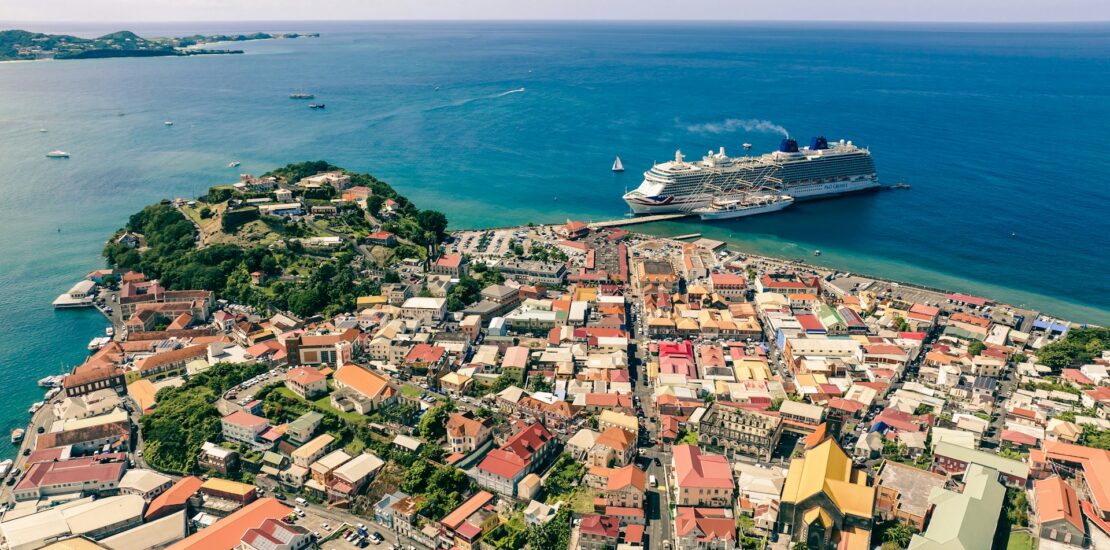
If you are a global entrepreneur who needs a presence in the United States but does not qualify for an E-2 visa through your current citizenship, Grenada can still change your options. Grenada is an E-2 treaty country, which means Grenadian citizens may be eligible to apply for the US E-2 Treaty Investor visa if they meet the US requirements.
For founders from India, China, Vietnam, South Africa, Brazil and many other entrepreneur-producing economies that do not have E-2 treaty access, this can be valuable. However, the position is more nuanced than it used to be. Since late 2022, US law has added an important 3-year domicile requirement for people who acquire treaty-country nationality through financial investment and have not previously been granted E status. That means Grenada should not be treated as an automatic or immediate E-2 shortcut.
For everyone else, Grenada is one Caribbean citizenship among several, and the case for choosing it over Antigua, Dominica, St Lucia, or St Kitts and Nevis is less clear-cut.
That distinction matters. The Grenada programme is sometimes oversold to applicants who would do equally well on a cheaper or simpler route. It is also sometimes underestimated by founders who do not realise how much US business access it can unlock when structured properly. Working with an experienced Immigration Consultant is the difference between using the route well and treating it as a generic passport purchase.
This article sets out where Grenada fits, how the E-2 angle actually works in practice, what the programme costs in 2026, and where you should look instead if the US business element does not apply to you.
Who Grenada Is Genuinely Useful For
There are 3 groups for whom Grenada citizenship can make specific sense.
The first is founders and business owners from non-treaty countries who want to set up or buy a US business and live in the US while running it. India and China between them produce a significant share of the world’s globally mobile entrepreneurs, and neither holds an E-2 treaty with the US. Grenada citizenship can open a route that would otherwise not exist, although the 3-year domicile rule now needs to be considered before any US plan is built around it.
The second is families with US education and business plans who do not want to commit USD 800,000 or more to the EB-5 programme. The piece on navigating the 2024 EB-5 reform sets out the EB-5 alternative in more detail. E-2 has its own constraints, including the fact that it does not lead directly to a green card, but for some families the flexibility outweighs the limitation.
The third is high-frequency travellers who value the combination of US business optionality, short-stay visa-free access to the UK and Schengen Area, and a Commonwealth passport. Grenada delivers that combination in a single application, but you should still compare it against other programmes before assuming it is the right fit.
If you do not fall into one of these groups, you should compare Grenada honestly with the alternatives before settling on it. The broader market context is in the post on global demand for second citizenship, and the firm’s citizenship by investment programmes overview lays out the available routes.
How the E-2 Treaty Investor Visa Actually Works
The E-2 is a non-immigrant visa that allows a citizen of a treaty country to enter the US to develop and direct a business in which they have made, or are actively making, a substantial investment.
The key features are these:
-
You must be a citizen of an E-2 treaty country. Lawful permanent residence in a treaty country is not enough.
-
If you acquired the treaty-country citizenship through financial investment, and you have not previously held E status, you may need to show that you have been domiciled in that treaty country for a continuous period of at least 3 years before applying.
-
The investment must be in a bona fide US enterprise, not passive real estate.
-
The investment must be substantial in proportion to the cost of the business. There is no statutory minimum, but many successful applications involve USD 100,000 or more, and many sit well above that.
-
You must be coming to the US to develop and direct the business.
-
The visa can be issued for up to 5 years depending on reciprocity and consular decision-making, and it can usually be renewed as long as the business continues to qualify.
-
Your spouse may be work-authorised in the US if admitted in the correct E spouse classification, and your unmarried children under 21 can attend school.
The E-2 does not lead directly to a green card. If permanent residence is your priority, EB-5 is the more direct route and the post on the Caribbean nations strengthening due diligence for citizenship by investment programmes covers the wider context. If long-term flexibility and lower upfront cost matter more, E-2 can still be attractive, but it must be planned carefully.
A US immigration lawyer must run the E-2 application itself. The Grenada citizenship work is separate, and you should not assume the Grenada side will deliver the US side. The 2 pieces fit together, but they are different professional engagements.
The 3-Year Domicile Issue That Applicants Must Not Ignore
The E-2 angle is the reason many entrepreneurs look at Grenada, but this is also the area where advice needs to be especially careful.
US law now includes a special rule for applicants who acquired their treaty-country nationality through financial investment. If the applicant has not previously been granted E status, they may need to have been domiciled in that treaty country for a continuous period of at least 3 years at some point before applying for the E visa.
This matters because many Grenada citizenship by investment applicants do not intend to live in Grenada. They want the passport for mobility and US treaty access. That may not be enough for the E-2 plan if the US authorities treat the Grenadian citizenship as having been acquired through financial investment.
There may be legal arguments in particular cases around the nature of the citizenship route, timing, domicile, family members, or prior E status, but those are US immigration questions. They should be reviewed before you commit money to either the Grenada application or the US business.
The practical message is simple: Grenada can still be a valuable E-2 planning tool, but it is no longer safe to describe it as an immediate bridge to E-2 for every citizenship by investment applicant.
The Grenada Citizenship Route In 2026
Grenada’s citizenship by investment programme has been operating since 2013. The programme is administered by the Grenada Citizenship by Investment Committee, with significant procedural changes introduced following regional reforms and the Caribbean Five harmonisation process. The minimum thresholds shifted upward and due diligence was tightened across the region. The Caribbean nations implementing unified standards for citizenship by investment programmes post covers the shared framework.
Two qualifying investment options are available.
The first is a contribution to the National Transformation Fund, currently set at USD 235,000 for a single applicant or a family of up to 4. Adding more dependants increases the contribution.
The second is an investment in an approved real estate project. The lower advertised threshold is currently from USD 270,000 where the project and co-investment conditions are met. In other cases, the required investment can be higher, and government fees, due diligence fees, processing fees, interview fees and legal costs are extra.
The current contribution structure for a typical family is broadly as follows. Figures are approximate and exclude legal, due diligence, government, interview, processing and other professional fees.
| Family Composition | NTF Contribution | Real Estate Option Lower Bound |
|---|---|---|
| Single applicant | USD 235,000 | From USD 270,000 |
| Applicant and spouse | USD 235,000 | From USD 270,000 |
| Family of 4 | USD 235,000 | From USD 270,000 |
| Family of 5 | USD 260,000 | From USD 295,000 |
| Each additional dependant | USD 25,000 | USD 25,000 |
At current exchange rates, the NTF contribution starts at roughly £185,000 to £190,000 before additional fees. A family application can easily move materially higher once due diligence, professional fees, passport fees and other charges are added. The country page for Grenada gives a current snapshot of the programme, and the service page for the Grenada citizenship by investment route sets out the legal process.
Family inclusion is one of the more generous features. Grenada can allow the main applicant’s spouse, children within the permitted age and dependency rules, parents and grandparents, and unmarried siblings of the main applicant or spouse who meet the programme conditions. This is wider than several other Caribbean programmes, but the detail should always be checked before filing.
Processing is often marketed at around 4 to 6 months for a straightforward file, but real timelines can vary. Complex files take longer. Interviews are now part of the current process, and the due diligence depth has increased materially, in line with the discussion in the St Kitts and Nevis tightens due diligence post and the parallel position across the region.
Applicants should also be aware that the Eastern Caribbean CBI framework is continuing to evolve. Further regional rules, including residency, biometric, escrow and regulatory changes, may affect new applicants as implementation progresses.
Cost Comparison With The Other Caribbean Programmes
Grenada is not the cheapest Caribbean citizenship. Its NTF threshold is now in the middle-to-higher part of the Caribbean range, with Dominica generally starting lower, Antigua and Barbuda close to Grenada, St Lucia in a similar range, and St Kitts and Nevis often at the higher end for the main contribution route.
The premium case for Grenada is not simply travel access. It is the E-2 treaty angle, plus family inclusion, Commonwealth status and overall mobility. If you are not planning to use the US business element, you may be paying for something you do not need.
The country page for St Kitts and Nevis and the service page for the St Kitts and Nevis citizenship route set out the longer-established alternative. The Dominica programme, accessible through the Dominica citizenship page, often presents the lower entry cost, and the post on Dominica citizenship by investment explains why the lower price does not mean lower planning standards.
For Antigua, an antigua and barbuda investor visa solicitor can run the route, and the country page for Antigua and Barbuda summarises the programme. For St Lucia, a st lucia investor visa solicitor can advise on the route, and the St Lucia country page is a useful starting point.
Turkey is another investment migration route that can be relevant to E-2 planning because Turkish citizens have E-2 treaty access. The minimum real estate investment is higher at USD 400,000, but Turkey offers different benefits and a different family and lifestyle proposition. The detailed posts on the Turkey citizenship by investment guide, the Turkey citizenship end-to-end timeline, the Turkey CBI source of funds guide, and the Turkey citizenship by investment purchase checklist cover the route comprehensively. The piece on living in Turkey after citizenship is worth reading if you are considering the lifestyle side, and the Turkish citizenship by investment lawyer due diligence post explains the documentation work.
Grenada and Turkey remain 2 of the best-known investment migration routes linked to E-2 planning, but the 3-year domicile rule means neither should be treated as a quick technical fix without US immigration advice.
What “Substantial Investment” Means For E-2
This is the part of the planning that many Grenada applicants underestimate. Citizenship is one process. The US business investment is a separate one, with its own legal and commercial requirements.
A successful E-2 application generally involves the following:
-
A real, operational US business that is active and not marginal.
-
An investment proportional to the cost of the business.
-
Funds that are committed and at risk, not simply sitting in a personal account.
-
A clear business plan demonstrating how the enterprise will operate, grow and support US workers.
-
The investor’s intention and capacity to develop and direct the business.
Buying a small franchise, acquiring an existing US business, or building a new operation from scratch can all qualify. Passive real estate investment does not.
You should engage a US immigration lawyer to advise on the E-2 side as early as possible, ideally before you start the Grenada citizenship process. A common error is to spend a large sum on Grenada citizenship and then discover that the US business plan, the domicile position, or the source of funds evidence does not meet E-2 standards.
Family Planning Around The Route
Most families do not apply for Grenada citizenship as individuals. They apply as a family, with the long-term plan of using the citizenship across multiple generations. The post on second citizenship for children explains the implications for younger family members, and the article on second passport practicalities covers what holding the passport actually involves once granted.
Grenadian nationality can also be relevant for children born after the parents become citizens, subject to Grenada’s nationality rules and registration requirements. This can be valuable across generations, particularly for families that plan to use treaty access, education options or global mobility over the long term.
For families that want to combine Grenada citizenship with an EU residency, the firm’s comparing residency and citizenship programmes overview is helpful. A Greek route through a Greek FIP visa solicitor can provide EU optionality alongside the Caribbean citizenship. A Hungarian route through a hungary investor visa lawyer can deliver low-maintenance EU residency at a similar overall cost. For families that want EU residence with a possible path to EU citizenship, a malta citizenship by investment consultant can advise on Malta’s current position, although Malta’s former investor citizenship model narrowed materially following the 2025 EU court ruling.
How Grenada Compares With The Alternatives
The clearest way to think about Grenada is by use case.
-
If your primary objective is US business access from a non-treaty country, Grenada is worth serious consideration, but only after the E-2 domicile issue has been reviewed.
-
If your primary objective is visa-free travel, Grenada is a strong option, but Antigua, St Kitts and Nevis, St Lucia and Dominica may be roughly comparable depending on your travel pattern.
-
If your primary objective is cost minimisation, Dominica is often cheaper.
-
If your primary objective is EU residence, none of the Caribbean programmes is the right tool, and you should look at residency in an EU member state.
-
If your primary objective is a fast second passport for general optionality, Vanuatu may be faster but has weaker travel access, particularly because it does not currently offer the same Schengen access as the main Caribbean programmes. The post on Vanuatu citizenship in as little as two months covers that alternative.
The wider question of when a citizenship by investment lawyer adds value versus a consultant is set out in the golden visa lawyer vs consultant post, and the role of a regulated practice is explained in the investment migration law firm overview. The post on what a citizenship by investment lawyer actually does is the cleanest summary of the work involved.
Two Worked Examples
Consider a 38-year-old founder from Bangalore who has built and sold 2 software businesses, with USD 4 million in liquidity. He wants to launch a third venture in the US and live in San Francisco with his wife and young son. India is not an E-2 treaty country and the family does not want to commit USD 800,000 plus to EB-5.
Grenada may still be part of the plan, but it should not be presented as a simple 12-month bridge into the US. The family would need advice on whether the 3-year domicile rule applies, whether they can realistically establish domicile in Grenada, whether an alternative US route is available in the meantime, and how the E-2 business should be structured. The combined plan may still be attractive, but it needs to be built around the current US rules, not the older marketing version of the route.
Now consider a 45-year-old textile business owner from Karachi who wants visa-free travel to the UK and Schengen, with no immediate plan to move to the US. Pakistan already has E-2 treaty access, so Grenada is not needed for that purpose. For this client, Grenada may still be plausible for travel, family inclusion and passport diversification, but it is not necessarily optimal. Antigua, Dominica, St Lucia or Turkey may be better depending on family size, travel patterns, existing nationality, banking needs and long-term planning.
The point of both examples is that the choice of programme should follow the use case, not the marketing.
Common Mistakes
The mistakes that recur in Grenada planning tend to fall into 4 categories.
-
Buying Grenada citizenship without a developed US immigration and business plan, then discovering the E-2 application will not succeed in its current form.
-
Ignoring the 3-year domicile rule for E visa applicants who acquired treaty-country citizenship through financial investment.
-
Underestimating the depth of due diligence under the Caribbean Five framework, which now includes interviews and stricter source of funds work.
-
Treating Grenada citizenship as a path to a US green card. It is not. EB-5 is the more direct investor route to permanent residence.
-
Picking Grenada solely on the basis of visa-free travel, when Antigua, St Lucia or Dominica might deliver similar coverage at lower cost.
The post on the residency by investment vs citizenship by investment trade-off is useful here, because some applicants who think they need a passport actually need a residency. The piece on what a second passport solicitor does is also worth reading if you are still working out which professional you need.
Frequently Asked Questions
How long does Grenada citizenship by investment take?
A clean file is often marketed at around 4 to 6 months, but practical processing times vary, especially now that due diligence and interviews are more demanding. Complex cases run longer. The article on the Caribbean nations strengthening due diligence sets the expectations.
Do I need to live in Grenada?
At present, Grenada citizenship by investment has generally not required applicants to live in Grenada before citizenship is granted. However, Eastern Caribbean CBI reforms may introduce or standardise residency obligations for new economic citizens, so current requirements should be checked before applying. Separately, if your plan is to use Grenadian citizenship for a US E-2 visa, the US 3-year domicile rule may make actual Grenada domicile relevant even if Grenada itself does not require residence for citizenship.
Will I have to give up my current citizenship?
Grenada permits dual citizenship. Whether your current country permits it is a separate question. Some countries, including India and China, do not generally permit dual citizenship in the same way, and applicants may need to renounce or otherwise manage the consequences under their home country’s law. Indian applicants often consider Overseas Citizenship of India status to maintain a practical link with India after acquiring foreign citizenship.
Can I use Grenadian citizenship to apply for the US E-2 visa immediately?
Not safely as a general assumption. Grenada is an E-2 treaty country, but US law can require applicants who acquired treaty-country nationality through financial investment to have been domiciled in that treaty country for a continuous period of at least 3 years before applying, unless an exception or different legal analysis applies. You should consult a US immigration lawyer before assuming an immediate E-2 path.
How much do I need to invest in the US for an E-2 visa?
There is no statutory minimum. Many successful applications involve investments of USD 100,000 to USD 500,000 or more, depending on the business. The investment must be substantial in relation to the total cost of the business, committed and at risk. Passive investments do not qualify.
How does Grenada compare with Turkey for E-2 purposes?
Both can be relevant to E-2 planning because both Grenada and Turkey are E-2 treaty countries. Grenada may offer broader travel access and a Caribbean Commonwealth passport. Turkey involves a higher property threshold but can be attractive for applicants who want a larger market, a different lifestyle base, or a recoverable real estate-led route. Both require careful E-2 advice because of the 3-year domicile issue. The post on the Turkey citizenship by investment guide is the cleanest summary.
Will Grenadian citizenship affect my UK tax position?
Holding a second citizenship does not by itself determine UK tax residence. The April 2025 changes to UK tax rules replaced the old non-dom regime with a new residence-based framework for foreign income and gains. You should take separate UK tax advice before assuming that a second passport has no tax consequences in your wider planning.
Can I include my parents in the application?
Yes, Grenada can allow parents and grandparents to be included, subject to programme conditions. It can also allow certain unmarried siblings over 18. This is one of the wider family inclusion structures in the Caribbean, but the dependency and eligibility rules should be checked carefully before filing.
Is the programme likely to change?
Yes. Caribbean citizenship by investment programmes have changed materially in recent years and may continue to evolve. The regional harmonisation and ECCIRA process has brought tighter due diligence, interviews, information sharing and possible residency or biometric requirements. A current adviser will know the present state. The post on Caribbean nations implementing unified standards covers the regional framework.
Talk Through Your Situation With A Specialist
Grenada is a precise tool. It can work very well for entrepreneurs who need US business optionality and who are willing to plan properly around the E-2 requirements. It is one of several options for everyone else, and the case for choosing it should be made on the basis of how you will actually use the citizenship, not on its marketing.
If you are weighing Grenada against other routes, or thinking about combining a Caribbean citizenship with an EU residency, the team at Coates Global can run a confidential planning session and outline the combinations that fit your situation. Get in touch to start that conversation.

Moving Borders... Building Futures...
Contact with our legal experts and take the first step toward seamless international relocation.
Ready to secure your future with global opportunities?
Let our experts guide you through the best Golden Visa and Citizenship by Investment programmes.