
Dubai Unifies Golden Visa And Property Residency Under A Single GDRFA Platform
- 24 April 2026
- Posted by: CoatesGlobal
- Category: Golden Visa
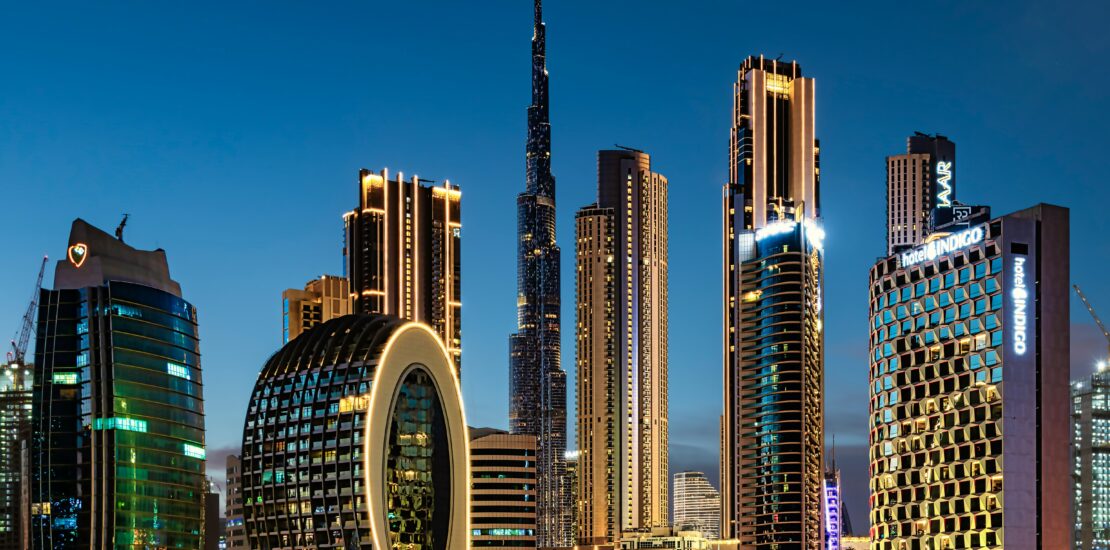
If you have been watching the global investment migration space, Dubai has just made a move worth paying attention to. In April 2026, the General Directorate of Residency and Foreigners Affairs Dubai (GDRFA Dubai) and the Dubai Land Department (DLD) signed a memorandum of understanding to bring property-linked residency services into a more unified digital system.
It is a significant administrative reform and one that tells you quite a lot about where investor residency programmes are heading more broadly.
What Has Actually Changed
Until now, applying for Dubai’s property-linked residency options could involve dealing with different parts of the government process separately. Property ownership and valuation needed to be verified through the DLD, while visa and residency processing sat with GDRFA Dubai.
The new MoU is designed to integrate three key services into GDRFA Dubai’s system: Golden Residency, Retiree Residency, and Property Residency. The aim is to give applicants, property owners, investors, immigration advisers, and real estate developers a more streamlined route for submitting and managing applications.
The unified platform is expected to make it easier to complete service requests through one channel, improve data exchange between government entities, reduce duplication, and shorten processing times. In practical terms, that should mean less back-and-forth between departments and a clearer process for applicants.
For overseas buyers, including those based in the UK, the move should make the early stages of the process easier to manage digitally. However, applicants should still expect that some steps, such as biometrics or medical checks where required, may involve attendance in the UAE at some point in the process.
The Core Requirements Have Not Changed
It is worth being clear about this, because when governments announce administrative reforms, people sometimes worry that the underlying programme has shifted underneath them.
The integration does not change the core requirements for Dubai’s property-linked Golden Visa route. The real estate route still generally requires property ownership with a value of at least AED 2 million. At the time of writing, that is approximately £434,000, although exchange rates fluctuate and applicants should always check the current rate before making financial decisions.
The Golden Visa remains a long-term, renewable residence visa, typically issued for 10 years for qualifying applicants. It does not create a standard route to UAE citizenship or permanent residency in the way some European residence routes may eventually lead to naturalisation.
What has changed is the administration around the process. Separate updates to the property route have also made the position more flexible for some applicants, particularly where mortgaged, off-plan, or multiple-title-deed properties are involved, provided the relevant Dubai Land Department valuation and ownership requirements are met.
Together, these developments reshape the practical experience of obtaining Dubai property-linked residency without changing the headline AED 2 million investment threshold.
Why This Matters For Internationally Mobile Investors
Dubai’s approach here is worth watching not just for what it means in the emirate itself, but because it reflects a broader trend across well-run investment migration programmes globally: the shift towards digital-first, integrated government infrastructure.
The best Second Passport and residency programmes are increasingly competing not just on headline costs or visa-free access, but on operational quality. Applicants care about how smoothly the process runs, how predictable the timeline is, and how much friction they face along the way.
The Dubai reform sits alongside a wider push to modernise real estate and residency services. Dubai has also been developing regulated real estate tokenisation through the DLD, including tokenised property initiatives designed to support fractional ownership and improve market transparency.
That does not mean tokenised property automatically qualifies for residency. Applicants should be careful here. What it does show is that Dubai is moving towards a more digitised property ecosystem, and residency administration is becoming part of that wider direction.
For those exploring the broader investment migration landscape, this kind of development is useful context. It is not just about Dubai itself, but also about how efficiently other programmes are run and how quickly governments can join up property, immigration, and digital identity systems.
How Dubai’s Offering Compares To European Routes
Dubai’s Golden Visa is fundamentally a residency programme. It continues to offer long-term renewable residency without a standardised route to citizenship or permanent residence. That is an important distinction if your goal is an EU passport or long-term settlement rights rather than a long-stay residence permit.
For those considering European alternatives alongside or instead of Dubai, a few comparisons are worth drawing out.
Portugal remains one of the best-known fund-based routes to European residency, with a minimum investment of €500,000 into a qualifying investment or venture capital fund. It can also provide a route to Portuguese citizenship after 5 years, subject to meeting the legal requirements at the time, including residence, documentation, and language conditions. If you are looking at Dubai partly for its operational efficiency, it is worth knowing that Portugal has also been investing in streamlining AIMA processing systems, although delays and backlogs remain a known challenge. You can read more about how the fund route works in our guide to Portugal Golden Visa investment funds.
Greece offers property-based Golden Visa residency, but the minimum investment depends heavily on the property location and type. In many high-demand areas, including Athens, Thessaloniki, Mykonos, Santorini, and islands with more than 3,100 residents, the threshold is generally €800,000. In other areas, the threshold is commonly €400,000, with some specific conversion or restoration categories still available from €250,000. Greece provides Schengen access and may lead to citizenship after 7 years of legal residence, subject to strict residence, language, integration, and other naturalisation requirements. Our article on Greece Golden Visa requirements sets out the full picture.
Hungary is worth considering if you want EU residency with a lower minimum than Portugal. The Hungary Guest Investor Visa includes a €250,000 investment route through approved real estate funds and can lead to a 10-year renewable residence permit. However, applicants should take current advice, as investor visa rules and implementation details can change. Our piece on the Hungary Guest Investor route is a good starting point.
Cyprus offers fast-track permanent residency through a qualifying investment, commonly involving a minimum of €300,000 plus VAT in eligible new property or another approved investment category. Processing can be relatively fast compared with many European alternatives, but applicants must also meet income and documentation requirements. For a full breakdown, our article on Cyprus fast-track permanent residency explains how it works in practice.
If your priority is EU citizenship rather than residency, Malta’s Exceptional Services by Naturalisation framework is in a different category altogether. It can lead to full EU citizenship for eligible applicants after a residence period and a significantly higher financial commitment, subject to strict due diligence and legal requirements. A qualified adviser can walk you through how Malta citizenship by investment works and whether it fits your goals.
What The Dubai News Means If You Are Comparing Options Right Now
For UK-based investors specifically, Dubai is an appealing proposition for several reasons that have nothing to do with immigration: no personal income tax in the UAE, a time zone that works well for business across Asia and Europe, strong infrastructure, and a large existing British expatriate community.
For multinational employers, the consolidation could also be helpful. Companies relocating senior executives may find it easier to coordinate property and residency formalities through a more joined-up process, rather than handling each stage separately.
But the things Dubai cannot offer are also worth naming clearly. There is no standard citizenship pathway through the property-linked Golden Visa. There is no Schengen access. And as an emirate within the UAE rather than an EU member state, Dubai sits outside the legal and regulatory frameworks that give European residency and citizenship programmes their particular long-term value.
Whether that matters depends entirely on what you are trying to achieve. If you want to base yourself in a low-tax, well-connected global hub with a long-term renewable residence visa and a comparatively efficient administrative system, Dubai may be attractive. If you want a route to an EU passport or Schengen freedom of movement, you are looking at a different set of options entirely.
For a clear-headed look at how residency and citizenship programmes differ in terms of what they actually deliver long-term, our article on residency by investment vs citizenship by investment is worth reading before you make any decisions.
A Note On The Broader Context
The GDRFA-DLD integration did not happen in a vacuum. Dubai and the wider UAE have continued to expand and refine the Golden Visa framework over recent years, with eligibility categories covering investors, entrepreneurs, skilled professionals, exceptional talents, students, humanitarian contributors, and other qualifying groups.
The UAE has also extended additional consular support to Golden Visa holders and their registered family members, including emergency assistance abroad and help with return documentation in certain circumstances.
That matters because one of the quieter selling points of a well-run residency programme is that it creates a documented relationship between you and a government. That relationship can matter when things go wrong, not just when everything is going smoothly.
This is something the best European programmes also encourage applicants to consider carefully. Our article on the practicalities of holding a second passport explores this dimension in more detail, including what consular protection and emergency services can look like across different types of status.
Frequently Asked Questions
Does The GDRFA Platform Change The Minimum Investment Required For Dubai’s Golden Visa?
No. The minimum property valuation required for the real estate Golden Visa route generally remains AED 2 million. The recent integration is about the application and administration process, not a reduction in the headline property threshold.
Can I Apply For Dubai’s Golden Visa Remotely From The UK?
The more unified digital process should make the early application stages easier to manage remotely, including document submission and tracking. However, applicants should still expect that some steps, such as biometrics, medical checks, or final in-country formalities, may require travel to the UAE. You should check the exact process before relying on a fully remote timeline.
Does The Dubai Golden Visa Lead To Citizenship?
No. Dubai’s Golden Visa provides long-term renewable residency. There is no standard pathway to UAE citizenship for investment-based applicants. If citizenship is your goal, you would need to consider a separate programme, such as a Caribbean citizenship route, Malta, or a European naturalisation pathway.
How Does The AED 2 Million Threshold Translate To Pounds Sterling?
At the time of writing, AED 2 million is approximately £434,000. Exchange rates move constantly, so you should confirm the current rate before making any property or investment decision.
Is Dubai’s Residency Programme Suitable For Families?
Yes. Dubai’s Golden Visa can allow the main applicant to sponsor eligible family members, including a spouse and children. In some cases, other dependants may also be possible, subject to the rules in force at the time of application. Family applications should be planned carefully so that documentation, medical checks, and visa issuance are handled correctly.
Can I Hold Dubai Residency Alongside A European Golden Visa Or Second Passport?
In many cases, yes. Holding more than one residency status or citizenship can be legally possible, but you should always take advice on tax residence, reporting obligations, domicile, and any rules that apply in the UK or other countries connected to you. Holding Dubai residency alongside a European second passport can be useful for some internationally mobile investors, but it should be structured properly.
Thinking Through Your Options?
Dubai’s unified platform is a meaningful step forward for one of the world’s busiest investment residency markets. But it is one option in a much larger landscape, and the right choice depends heavily on what you actually need from a second residency or citizenship.
At Coates Global, our team of qualified immigration lawyers works with high-net-worth individuals and families across a broad range of programmes in Europe and the Caribbean. We can help you weigh up the options clearly, without steering you towards any particular programme for the wrong reasons.
Get in touch today to arrange a consultation and work out which route genuinely fits your goals.

Moving Borders... Building Futures...
Contact with our legal experts and take the first step toward seamless international relocation.
Ready to secure your future with global opportunities?
Let our experts guide you through the best Golden Visa and Citizenship by Investment programmes.