
Greece Golden Visa Property Search: How to Shortlist Areas Without Falling for “Residency-First, Value-Second” Sales Tactics
- 5 May 2026
- Posted by: CoatesGlobal
- Category: Greece
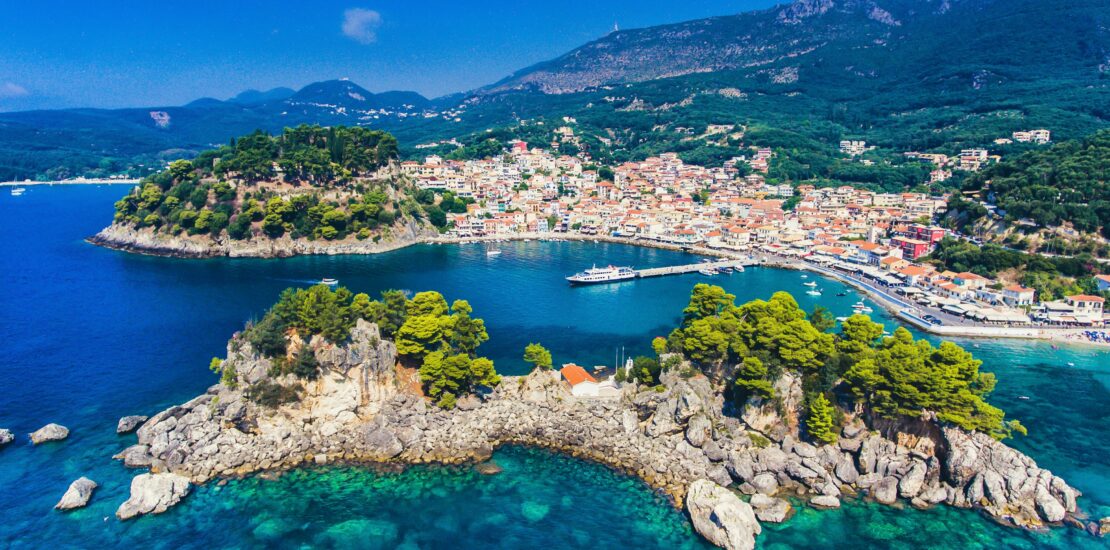
Greece now stands as the last major EU country offering residency through direct property purchase. Spain closed its Golden Visa in April 2025. Portugal removed real estate from the qualifying investment routes in 2023. That leaves Greece in a unique position — and a correspondingly busier, more competitive sales environment where applicants need to be particularly clear-eyed about how property choices get presented to them.
If you’ve started your search, you’ve probably already noticed a pattern. Listings are frequently framed primarily around visa qualification rather than property fundamentals. Agents emphasise the residency outcome first, and the investment quality second — or not at all. That framing can lead you into purchasing something that qualifies for a permit but doesn’t serve your financial interests, your lifestyle, or your long-term goals.
This article is about how to approach that search differently: understanding the threshold structure clearly, knowing what sales tactics to watch for, and building a shortlist based on what actually matters for your specific situation.
The Threshold Structure in 2026: What You’re Actually Choosing Between
The first thing to understand is that the investment threshold isn’t one number — it’s three, and which one applies to you depends entirely on the type and location of the property you’re considering. Under the new framework, the minimum investment requirement is €800,000 for high-demand, densely populated regions, and €400,000 for less populated areas. Despite these increases, certain €250,000 investment options remain available.
Here is how those tiers currently break down:
€250,000 — Conversion and listed building route The €250,000 Golden Visa in Greece still exists, but it is no longer geography-based. Investors can still qualify for a five-year residence permit by purchasing properties that involve converting commercial real estate into residential units, or restoring protected or listed buildings. There is no minimum size requirement for these properties, but there are strict rules about what counts as a genuine conversion. A 2026 government circular confirmed that a conversion must have occurred after 5 April 2024 when Law 5100/2024 took effect, and properties that were already residential on that date cannot be flipped to commercial and back again to qualify at €250,000.
Critically, once the conversion is done and the first permit granted, the favourable threshold is spent. If the first permit holder sells the resulting residence to another non-EU national, that buyer must meet the standard €400,000 or €800,000 threshold.
€400,000 — Standard areas across Greece This is the main threshold for most residential property purchases outside the high-demand zones. In the €400,000 category, the property generally needs to be a single property of at least 120 sq.m. This single-unit rule is important — combining multiple smaller properties to reach the threshold is no longer permitted across any of the qualifying routes.
€800,000 — High-demand zones The €800,000 tier covers Athens, Thessaloniki, Mykonos, Santorini, and islands with a population of more than 3,100 inhabitants. For UK buyers, these figures translate to roughly £344,000 and £688,000 respectively at current exchange rates — before taxes, legal fees, and purchase costs are added. Our full Greece Golden Visa cost guide covers these additional costs in detail, including property transfer tax, notary fees, and government permit charges per applicant.
What “Residency-First, Value-Second” Selling Actually Looks Like
Understanding the threshold structure helps you spot the sales tactic that has become increasingly common in the Greek Golden Visa property market: the qualification-first pitch.
It works like this. A property is marketed not on its merits as an asset — location, quality, condition, rental potential, capital growth prospects — but primarily on its eligibility for the residency programme. The fact that it qualifies becomes the headline, and everything else becomes supporting detail.
The problem with this framing isn’t that the eligibility information is wrong. It’s that qualification is the minimum bar, not the selection criterion. A property that qualifies for the Golden Visa and is genuinely well-located, well-priced, and suited to your use case is a good purchase. A property that qualifies for the Golden Visa and is overpriced, poorly located, or misrepresented in terms of its condition or income potential is a bad one — regardless of what it does for your visa.
Since Greece raised its Golden Visa thresholds in September 2024, social media and overseas platforms have been flooded with advertisements promoting properties at €180,000 to €230,000 as Golden Visa-eligible. Greece’s government responded with Circular 1/2026 — a 31-page directive instructing one-stop services across the country to refer misleading advertisements and sham investment transactions to the tax authority and the Hellenic Anti-Money Laundering Authority.
The fraud risk is real, and it goes beyond misleading pricing. Investigations by Greece’s Anti-Money Laundering Authority have targeted property agents suspected of taking down payments from investors without delivering properties, in some cases selling the same property multiple times to different investors.
Working with a qualified immigration consultant who operates independently of property sales commissions is the single most effective protection against these risks.
The Short-Term Rental Ban: A Factor That Changes the Value Equation
One of the most significant developments from the 2024 law changes is the short-term rental restriction. Greek law expressly prohibits Golden Visa real estate from being used for short-term rentals in the sharing economy — Airbnb-type lettings — or for sub-letting. Violation triggers permit revocation and a €50,000 administrative fine.
This matters for the property search because many sellers and agents still market Golden Visa properties with implied or explicit references to Airbnb income potential. If the property is qualifying under the standard residential routes, that pitch is not accurate.
The restriction on short-term rentals is not a grey area — it is part of the law that governs the qualifying investment. If you intend to generate income from a Golden Visa property, long-term residential letting is the route that stays within the rules.
Our article on Greece Golden Visa and renting your property explains the distinction between permitted and prohibited uses in plain terms — worth reading before you get into serious negotiations with any seller.
How to Build a Shortlist That Serves Both Goals
Rather than starting with “what qualifies?” and working backwards, the more useful approach is to start with your actual goals and work towards the qualifying properties that genuinely serve them. Here’s a framework for doing that.
Step 1: Decide what the property is actually for
Are you buying it primarily as a financial asset, expecting to hold it for five or more years and potentially sell? Are you buying it as a lifestyle base for your family — somewhere you’ll spend several weeks a year? Or is it genuinely both?
The answer shapes where you should be looking. Prime areas typically offer stronger resale markets and lower long-term volatility compared to secondary regions. Regional markets often provide stronger rental yields compared to central Athens due to lower initial costs — though they may not have the same liquidity if you want to sell later.
If your priority is capital preservation and eventual resale value, the higher-threshold €800,000 zones — particularly established areas of Athens and the most in-demand islands — tend to have deeper buyer markets. If your priority is rental yield and you’re comfortable with a longer-term hold, well-connected towns in the €400,000 zone can offer better income returns.
Step 2: Map the 120 sqm rule to your needs
The minimum size requirement of 120 sqm for the €400,000 and €800,000 routes sounds administrative, but it has practical implications. A 120 sqm property in Athens is typically a comfortable three-bedroom apartment. In some regional areas, it’s a substantial family home. Understanding what 120 sqm looks like in the area you’re considering helps you set realistic expectations before you start viewing.
Ancillary spaces — parking and storage — purchased in the same deed and building may count toward the minimum price but not toward the 120 sqm floor. This is a detail that can catch buyers out if they’re not paying attention to how the size is calculated in the listing.
Step 3: Check infrastructure, not just scenery
Greece’s most photographed areas — the white-washed islands, the clifftop villages — are genuinely beautiful. They’re also seasonal, sometimes isolated for parts of the year, and in some cases inaccessible for elderly or mobility-limited family members outside the peak summer months.
For families using the Golden Visa as part of a longer-term residential or lifestyle plan, access to schools, transport links, supermarkets, medical services, and airports matters just as much as the investment threshold.
Athens, the mainland coast, Crete, and the larger islands tend to offer year-round infrastructure that genuinely supports family life. If you’re planning to spend only summer weeks in Greece, a more seasonal location may be perfectly suitable. If you’re considering more extensive relocation at some point, check what the area looks like in October, not just August.
Our article on Greece Golden Visa for families looks at the schooling, healthcare, and day-to-day practicalities of different areas in more detail.
Step 4: Verify eligibility independently
Before you make an offer on any property, have the eligibility independently verified by a Greek lawyer who is acting for you — not for the seller. This means confirming the correct threshold for that property’s location and type, checking the title history, verifying that there are no planning irregularities, and confirming that the property genuinely meets the current qualifying criteria.
Processing times currently range from four to twelve months, with biometric appointment availability being a major variable. Delays most often arise from unclear title history, missing conversion documentation, or trying to force a property into a lower tier when it clearly falls in a higher one.
A property that looks eligible on paper can still create problems at the application stage if the due diligence wasn’t done properly at the purchase stage. Our Greece Golden Visa requirements guide sets out what that due diligence should cover in detail.
The Tax Dimension: Keeping Permit and Tax Residency Separate
One element of the property search that rarely gets discussed clearly upfront is the interaction between owning a Golden Visa property and becoming a Greek tax resident.
Holding a Greek Golden Visa does not automatically make you a Greek tax resident. Tax residency depends on how you actually live — specifically on whether you spend 183 or more days per year in Greece and meet other substantive connection criteria.
For UK buyers purchasing a Greek property as an investment and visiting seasonally, this is generally not an issue. But for those whose plan involves spending significantly more time in Greece over time, the interaction between UK and Greek tax obligations needs to be thought through before the purchase — not after.
Our article on Greek tax residency versus the Greek Golden Visa explains how these two statuses interact in practice and when it makes sense to keep them deliberately separate.
If Greece Doesn’t Fit, What Else Is There?
The framing of this article is specifically about making a better decision within the Greek market — but it’s worth acknowledging that for some applicants, the property-led approach doesn’t fit their goals at all.
If you want EU residency without committing capital to a specific property, a greece fip visa solicitor can walk you through Greece’s Financially Independent Person route — which requires annual passive income of at least €42,000 rather than any property purchase. This is worth considering for applicants who want Greek residency for lifestyle reasons but prefer not to lock capital into a single asset.
For EU residency through a fund rather than property, a hungary guest investor visa solicitor can explain Hungary’s Guest Investor route, which requires €250,000 into a regulated real estate fund and provides a 10-year Schengen permit without the responsibilities of direct property ownership.
If EU citizenship rather than residency is the primary goal, a malta citizenship by investment solicitor can advise on Malta’s Exceptional Services by Naturalisation programme — a different scale of commitment but a significantly different outcome. Our comparison of Greece vs Hungary vs Malta puts the three European routes side by side clearly.
For applicants who want a second passport for global mobility and are looking at Caribbean options alongside or instead of European residency, a st lucia citizenship by investment lawyer can advise on St. Lucia’s programme starting at USD 240,000, while an antigua & barbuda investor visa lawyer can walk you through Antigua’s programme — both deliver strong passports with visa-free access to over 140 countries.
For a full comparison across European residency programmes, our best Golden Visa in Europe for UK residents guide and the broader residency and citizenship programmes hub are useful starting points if you want to confirm that Greece is genuinely the right fit before you start viewing properties.
Frequently Asked Questions
Can I use multiple properties to reach the €400,000 or €800,000 threshold?
No. The single-property requirement introduced by Law 5100/2024 applies across all four qualifying routes. Multi-property portfolios are not permitted under any of the current thresholds.
Is the €250,000 conversion route still a realistic option in 2026?
It exists, but it’s narrower than marketed. Properties genuinely qualifying under this route must have undergone a change of use from non-residential to residential after 5 April 2024. Off-plan and retrospective conversions face significant hurdles, and the eligibility is only available once — subsequent buyers must use the standard thresholds. Proper legal verification before purchase is essential.
Can I visit Greece just once for the entire application process?
Broadly yes — most of the process can be handled remotely through a power of attorney, but you must visit Greece at least once in person to provide biometric data and collect your residence permit card.
Does the Golden Visa give me the right to work in Greece?
No. The Greece Golden Visa permits you to reside in Greece and travel across the Schengen Area, but does not grant the right to take up salaried employment. You can establish and manage a business and receive dividends from a Greek company.
How long does processing currently take?
In 2025, Greece reduced its Golden Visa backlog and improved processing times from an average of 18 months to around three months. Despite these improvements, processing times can still vary, and the country continues to handle high application volumes. Factors within your control — clean documentation, eligible property, proper title — have a significant impact on where within that range your application falls.
What happens to my residency if I sell the property?
Selling the qualifying property ends the condition that supports your permit renewal. You cannot sell and retain the residency without replacing it with another qualifying investment. Our article on Greece Golden Visa renewals covers the renewal requirements in detail, including what investment continuity evidence is needed each time.
Ready to Start Your Greece Property Search the Right Way?
The Greek Golden Visa property market rewards applicants who approach it as an investment decision first and an immigration decision second — because the residency follows from a qualifying purchase, but it doesn’t validate a poor one.
At Coates Global, our qualified immigration lawyers advise UK applicants through the full Greece Golden Visa process — from threshold verification and property due diligence through to application preparation and renewal. We work independently of property sales commissions, which means our advice is structured around your interests rather than any particular seller’s.
Get in touch today to arrange a consultation before you start viewing, and make sure you’re shortlisting properties that work on every level — not just the residency one.

Moving Borders... Building Futures...
Contact with our legal experts and take the first step toward seamless international relocation.
Ready to secure your future with global opportunities?
Let our experts guide you through the best Golden Visa and Citizenship by Investment programmes.